Mental Health

MelaGen® boosting moods, promoting sleep and improving mental health.

Modern life often disrupts our natural body clocks, leaving many of us in a state similar to perpetual jet lag. Poor lighting, especially the kind that lacks variation over the day or remains overly blue-enriched after dark, makes people more vulnerable to mood disturbances, anxiety, emotional reactivity and difficulty self-regulating. Sleep deprivation weakens the connection between our brain’s emotion-regulation centres and processing centres, increasing irritability, reducing trust in social interactions, and undermining calm decision-making and focus.

We designed MelaGen® to address these challenges by restoring healthy, natural light cues. Our lighting shifts from blue-enriched tones during active daytime hours to warmer, blue-depleted tones as evening approaches, helping the brain understand when to be alert and when to wind down. This rhythm supports better sleep, reduces emotional volatility, improves concentration and lessens impulsivity, all of which contribute to more stable mood and enhanced mental resilience.

For people experiencing stress, anxiety or depression, MelaGen® offers a lifeline through light that soothes and stabilises. By improving sleep quality, we support better self-regulation; by reducing emotional reactivity, we help improve relationships and social interactions. For everyone, the result is greater consistency in mood, sharper concentration, more positive engagement and an overall improvement in wellbeing.

Research

View the latest research on light in health facilities below:
Key Knowledge

Why are circadian rhythms influenced by light?

THE SCIENTIFIC RESEARCH Sleep & Circadian Rhythms MELANOPSIN A photopigment which is sensitive to blue light (480-490 nm) like the blue sky. It is in ...
Read More →
Key Knowledge

Sleep & Circadian Rhythms

THE SCIENTIFIC RESEARCH. The Circadian Rhythm All life on earth, has adapted to the 24-hour day night cycle, in synchronization with the earth’s rotation around ...
Read More →
Emerging Science

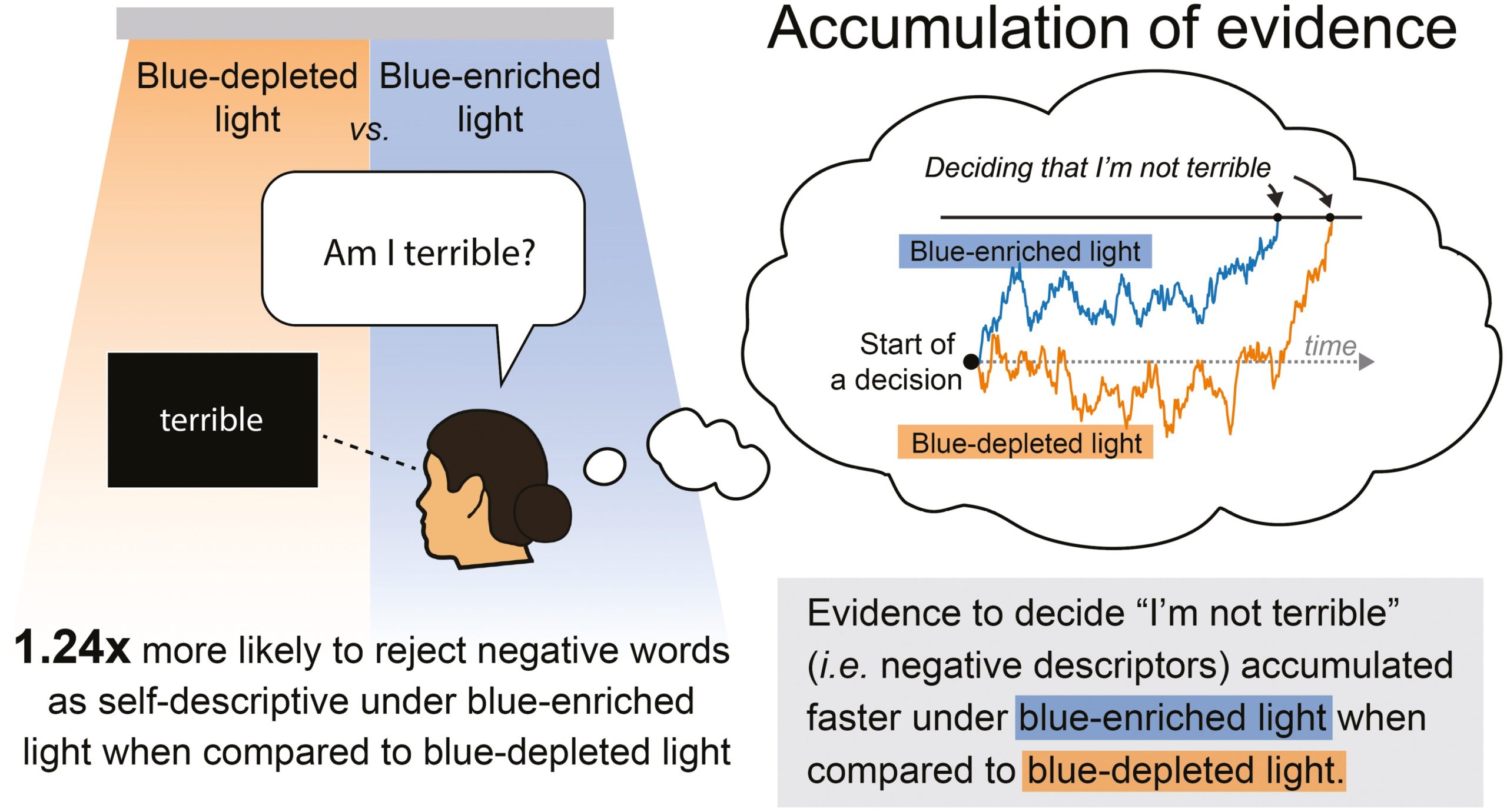
Blue light influences negative thoughts of self

MelaGen Active changes how we think of ourselves resulting in a more positive bias With MelaGen Active the subjects were 1.24x more likely to reject ...
Read More →
Emerging Science

Blue light exposure influences your amygdala

Exposure to Blue Wavelength Light Is Associated With Increases in Bidirectional Amygdala-DLPFC Connectivity at Rest Source: Frontier in Neurology DLPFC (Dorsolateral PFC) Region in the ...
Read More →
Emerging Science

Light exposure & type 2 diabetes

“The light from more than one candle can elevate the risk of T2 diabetes.” SCIENTIFIC FINDING: Personal light exposure patterns and incidence of type 2 ...
Read More →
Emerging Science

Impact of SSRIs (antidepressants) on light sensitivity and sleep

The SSRI citalopram increases the sensitivity of the human circadian system to light to an acute dose   Release of Melatonin (Melatonin Onset) Healthy sleeper, ...
Read More →

Projects Gallery